
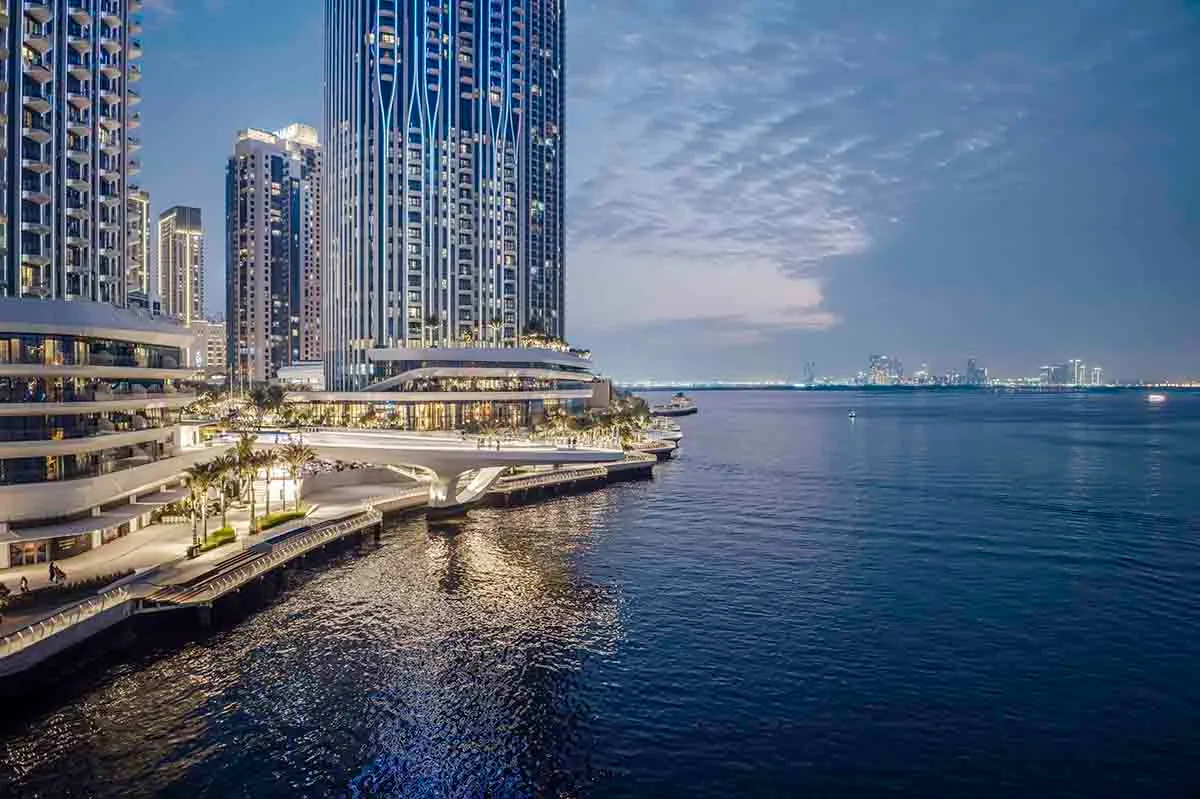
Dubai’s real estate market is expected to shift from momentum-driven buying to logic-based investment in 2026, following a record-breaking 2025 that saw historic transaction volumes and strong demand across the luxury sector.
Record year for Dubai property market
According to a report by fäm Properties, sales in Dubai reached an all-time high in 2025, with 197,263 transactions worth Dhs 624.1 billion between January and November, surpassing previous annual records even before the year ended.
The market was largely driven by momentum, with buyers making decisions based on market trends rather than fundamentals, developer track records, or long-term usability.
End-user demand, particularly from families preferring ownership over renting, strengthened significantly, adding stability to well-serviced communities.
The report also noted continued inflows of global capital, with ultra-high-net-worth individuals and families investing from Europe, the UK, CIS countries, India, Africa, and North America. Commercial real estate expanded alongside these trends, supported by growing demand in construction, logistics, and professional services.
Outlook for 2026
The report predicts a shift towards more selective and logic-based buying in 2026, with pricing, payment plans, construction quality, developer credibility, and end-user needs guiding market success. Prime luxury properties, including villas, branded residences, and waterfront assets, are expected to remain resilient due to structural undersupply.
“2025 momentum drove decisions, but 2026 will be the year when buyers and investors operate with far more logic and discipline,” said Firas Al Msaddi, CEO of fäm Properties. “Rather than being influenced by brand names alone, buyers will assess the full equation, price versus value, payment plan realism, construction consistency, location, and developer credibility.”
Tier-1 developers with proven delivery records are expected to dominate off-plan demand, while smaller developers may increasingly partner with established agencies to build trust with buyers. International developers, particularly from the United States, are entering the Dubai market, bringing new design standards and operational expectations.
Commercial real estate, including offices, logistics, and mixed-use developments, is projected to continue its momentum, supported by economic expansion and infrastructure investment. Areas connected to the upcoming Dubai Metro Blue Line, such as Dubai Creek Harbour, Festival City, and parts of Dubai Silicon Oasis and International City, are likely to see increased interest and price resilience.
Prime locations and lifestyle communities
Ultra-prime villa districts such as Jumeirah Bay Island, Palm Jumeirah, Al Wasl, Dubai Hills Estate, and Mohammed Bin Rashid City remain structurally strong, showing high resale velocity and low discount tolerance.
Walkable, lifestyle-focused communities including City Walk, Central Park at City Walk, and Bluewaters Island are also attracting attention due to integrated retail, design quality, and human-scale planning.
Corridors influenced by Etihad Rail, including Dubai South and the southern logistics corridor, are expected to become long-term strategic investment areas as inter-emirate connectivity and industrial demand grow.
“The winners in 2026 will not be defined by hype,” Al Msaddi added. “They will be defined by data, fundamentals, infrastructure, and brand credibility. Logic-based buying is back, and it will separate real assets from speculative noise.”
tanvir@dubainewsweek.com
