
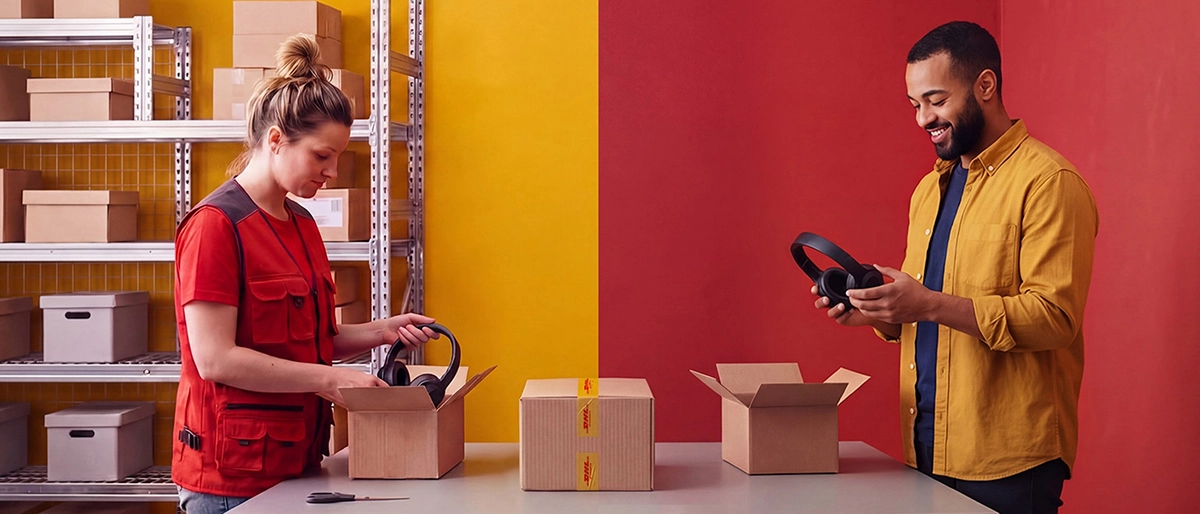
Online shopping habits in the UAE are changing quickly, with artificial intelligence, social commerce and second-hand sales shaping the future of e-commerce, according to the DHL eCommerce Trends Report 2026.
The study, based on responses from 29,000 online shoppers and 5,800 e-commerce businesses across 29 countries, including the UAE, highlights how digital behaviour is evolving and what retailers may need to adjust in the coming years.
AI shopping growth
The report shows that AI is becoming a regular part of the online shopping journey. In the UAE, 51% of shoppers already use AI-powered chat tools when shopping online, placing the country among the leading markets for AI-assisted commerce.
It also found that 29% of global shoppers are open to letting AI handle purchases in the future, rising to 33% among Gen Z and 36% among millennials. On the business side, 59% expect customers to increasingly use virtual assistants for browsing and buying.
AbdulAziz Busbate, CEO Middle East and North Africa, DHL Express, said: “The UAE’s strength as an e-commerce market lies in the combination of a highly digital society, strong connectivity global and intraregional and a consumer base that is quick to adopt new online shopping habits.
“As digital platforms, flexible payment options and delivery expectations continue to shape the market, businesses have a strong foundation for growth. For retailers in the UAE, local relevance and the ability to serve both domestic demand and cross-border opportunities will be key as e-commerce continues to evolve.”
Social commerce rise
Social media platforms continue to play a major role in online retail in the UAE. The report found that 68% of shoppers have bought through Facebook, 67% through Instagram, 57% through TikTok and 41% through YouTube.
On the business side, 82% have sold through Facebook, 75% through Instagram, 73% through TikTok and 52% through YouTube. Amazon remains the most popular online marketplace among both shoppers and businesses in the UAE.
Delivery preferences
The study also highlights changing expectations around delivery. While 84% of UAE shoppers still prefer home delivery, out-of-home options such as parcel lockers are gaining traction, with 12% using them for deliveries and 23% for returns.
A total of 64% of UAE shoppers also use paid delivery and returns subscriptions. At the same time, 62% of global shoppers say they will abandon a purchase if their preferred payment method is not available, pointing to the importance of flexible checkout options.
Second-hand growth
Second-hand and consumer-to-consumer (C2C) shopping is also becoming more common. Globally, 52% of consumers have sold items on online marketplaces, with higher activity among younger users.
The report notes that 45% of consumers buy second-hand or refurbished products for sustainability reasons, while 15% are open to doing so in the future. It also highlights that sustainable logistics is expected to become a standard expectation for 42% of consumers over the next five years.
Business outlook
Pablo Ciano, CEO of DHL eCommerce, said: “The ability to understand and respond to customer needs has always defined success – but our new eCommerce trend report shows that AI is now redefining that advantage at hyperspeed. Consumers can identify the best offer in milliseconds, and retailers can gain insights that allow them to instantly capitalize on changing demand. For those of us powering the delivery infrastructure behind e commerce, AI enables new levels of speed, flexibility, and precision. In this new era, the winners will be those who move fastest – and translate that speed into superior customer experiences.”
The report concludes that retailers will need to focus on trust, payment flexibility and delivery convenience as competition in online retail continues to intensify.
tanvir@dubainewsweek.com
