
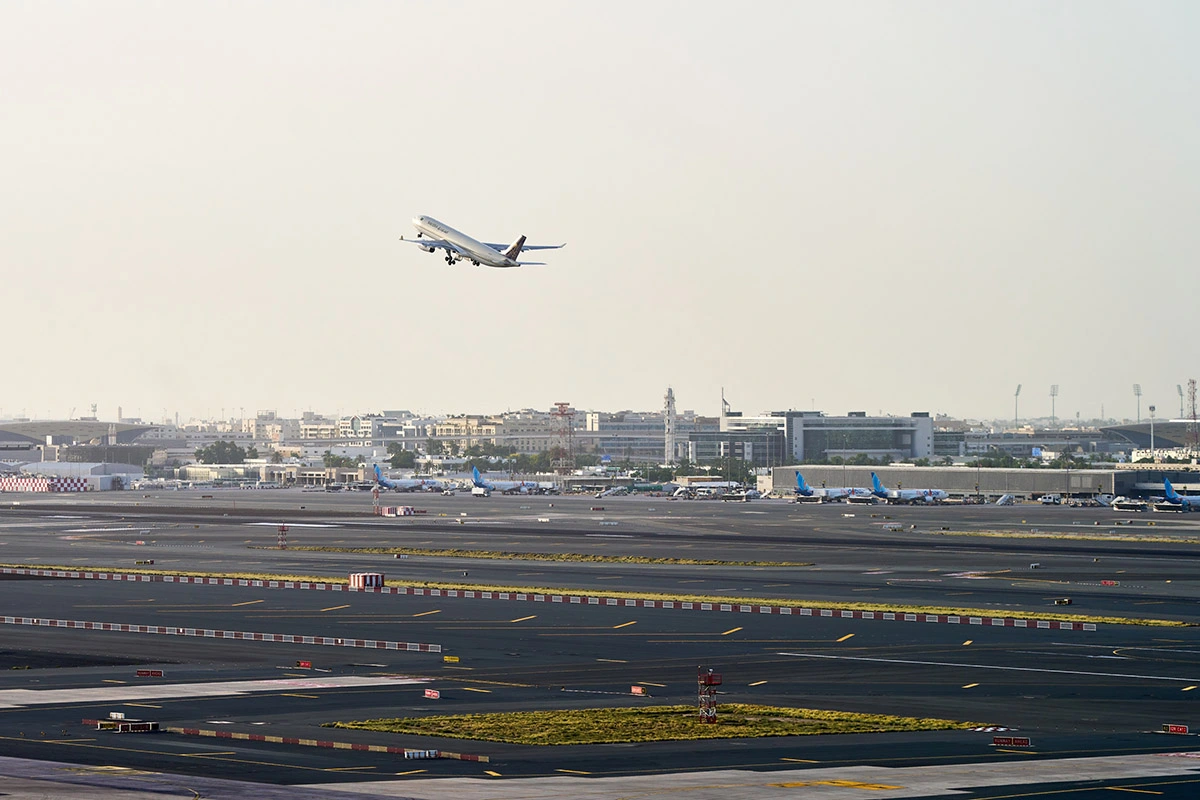
Dubai International Airport (DXB) is set to lead the world’s airports for scheduled international seat capacity in September, with 4.34 million departing seats and around 8.7 million seats in both directions, according to global aviation data provider OAG.
The latest ranking puts DXB ahead of some of the world’s biggest aviation hubs as airlines expand international operations and demand for travel enters the traditionally stronger second half of the year.
Dubai Airport beats London Heathrow
London Heathrow ranks second in OAG’s September ranking with 4 million departing seats, followed by Seoul Incheon International Airport with 3.78 million.
Amsterdam Airport takes fourth place with 3.7 million seats, while Istanbul Airport ranks fifth with 3.6 million.
The rest of the top 10 includes:
- Singapore Changi: 3.46 million seats
- Paris Charles de Gaulle: 3.45 million
- Frankfurt: 3.41 million
- Hong Kong International: 3.21 million
- Madrid: 2.7 million
The figures highlight the scale of Dubai’s international air connectivity, with DXB maintaining a lead over major European and Asian aviation hubs.
Dubai Airport’s September seat capacity in numbers
For travellers and the aviation industry, the key figure is 4.34 million scheduled departing international seats from Dubai in September.
When arrivals and departures are combined, the airport’s scheduled capacity reaches approximately 8.7 million seats.
The ranking measures scheduled airline seat capacity rather than the number of passengers who actually travel. In other words, the figures reflect the number of seats airlines have scheduled to operate, making the data an indicator of available international air connectivity rather than confirmed passenger volumes.
DXB passenger traffic gains momentum in 2026
The strong September capacity comes as Dubai International Airport records continued passenger growth during 2026.
DXB handled 31.5 million passengers in the first half of the year, with monthly traffic increasing during the second quarter.
Passenger numbers rose from 3.5 million in April to 4.5 million in May, before reaching 5 million in June.
That progression points to increasing traffic as the year moves towards its busier second half, when international travel demand typically strengthens.
Why Dubai’s airport capacity matters
The continued high level of scheduled capacity reinforces Dubai’s position as a major international aviation hub and supports connectivity between the UAE and key global markets.
The September figures also reflect the expansion of airline operations serving Dubai, alongside stronger travel demand and the return of international events and seasonal travel activity.
For passengers, increased scheduled capacity can mean more flight options across international routes. For airlines and the wider aviation sector, it signals continued demand for connections through one of the world’s most heavily served international airports.
Dubai enters a busy second half of 2026
The latest OAG ranking comes as Dubai’s air traffic builds through the year. Rising passenger numbers between April and June, combined with expanded airline operations, have helped strengthen the airport’s scheduled capacity.
With the winter travel season approaching, the September figures suggest that demand for flights through Dubai remains strong across major international markets.
For Dubai, the significance extends beyond the airport itself: strong international connectivity supports the city’s role as a global destination for tourism, business and events.
tanvir@dubainewsweek.com
