
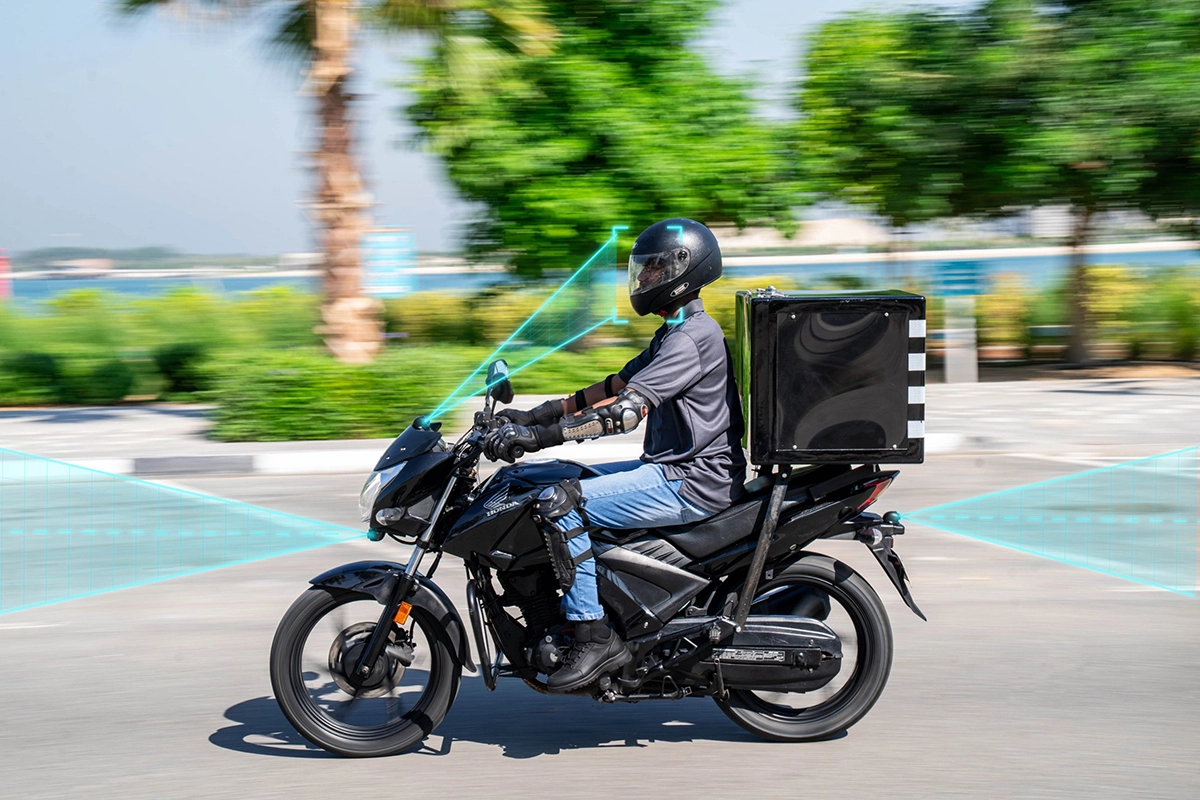
Dubai’s delivery motorcycle sector is set to come under closer digital monitoring, with the Roads and Transport Authority (RTA) preparing to introduce a system that tracks riders’ behaviour and fleet operations in real time.
The new system will use Internet of Things (IoT) devices, advanced cameras and a smart digital platform to monitor driving patterns, including speeding, sudden acceleration, harsh braking and route information.
The initiative aims to improve road safety, strengthen compliance with traffic regulations and help delivery companies manage their motorcycle fleets more effectively.
Smart cameras to track riders’ road behaviour
The monitoring system will collect and analyse operational data from delivery motorcycles, giving authorities and delivery companies a clearer picture of how riders use Dubai’s roads.
The information will include:
Speed and driving patterns.
Sudden acceleration and harsh braking.
Motorcycle locations and routes.
On-road behaviour and operational performance.
The data will help identify unsafe riding practices and allow companies to take corrective action through rider training and awareness programmes.
Saeed Al Ramsi, Director of Licensing Activities Monitoring at RTA, said: “The new system marks a step-change in monitoring of delivery activity. It covers a smart digital platform, IoT-enabled monitoring devices, and advanced cameras fitted to delivery motorcycles.
“The system will gather and analyse data on driving indicators and on-road behaviour, including speed, sudden acceleration, harsh braking, driving patterns, location and route. This will allow operational performance to be tracked and unsafe practices detected with greater accuracy and efficiency.”
Smart monitoring becomes mandatory in 2027
Delivery companies will initially have time to prepare for the new requirements.
According to the RTA, installing monitoring devices and connecting motorcycles to the digital platform will be optional from the system’s launch until the end of the first half of 2027.
The requirements will become mandatory after this transitional period, giving companies time to complete technical preparations and integrate the technology into their operations.
During this phase, the RTA will coordinate with delivery companies and relevant authorities to support implementation.
Delivery companies to benefit from real-time fleet data
Beyond road safety, the system is expected to give delivery operators better tools to manage their fleets.
Companies will be able to use operational indicators to assess driving patterns, monitor rider performance and identify areas where additional training may be needed.
Al Ramsi said: “The system reflects RTA’s shift from conventional monitoring to proactive, data-driven oversight underpinned by smart analytics. It is also the result of ongoing cooperation with Dubai Police General Command and relevant entities in developing an integrated system that balances operational efficiency with safety and compliance requirements.
“By giving companies practical tools to monitor the performance of their fleets and riders in real time, the system will enable them to take early corrective and awareness measures, thereby improving delivery service quality and raising safety and security standards across this vital sector.”
Dubai strengthens delivery sector regulations
The initiative comes as demand for delivery services and the number of delivery motorcycles on Dubai’s roads continue to grow.
By building a centralised operational database, the RTA aims to improve regulatory oversight, support future policy decisions and encourage delivery companies to adopt safer operating practices.
The authority is also working with Dubai Police and other relevant entities to support the system’s implementation.
The project forms part of Dubai’s wider efforts to use smart technology and data to improve transport management, road safety and the quality of mobility services across the emirate.
tanvir@dubainewsweek.com
