
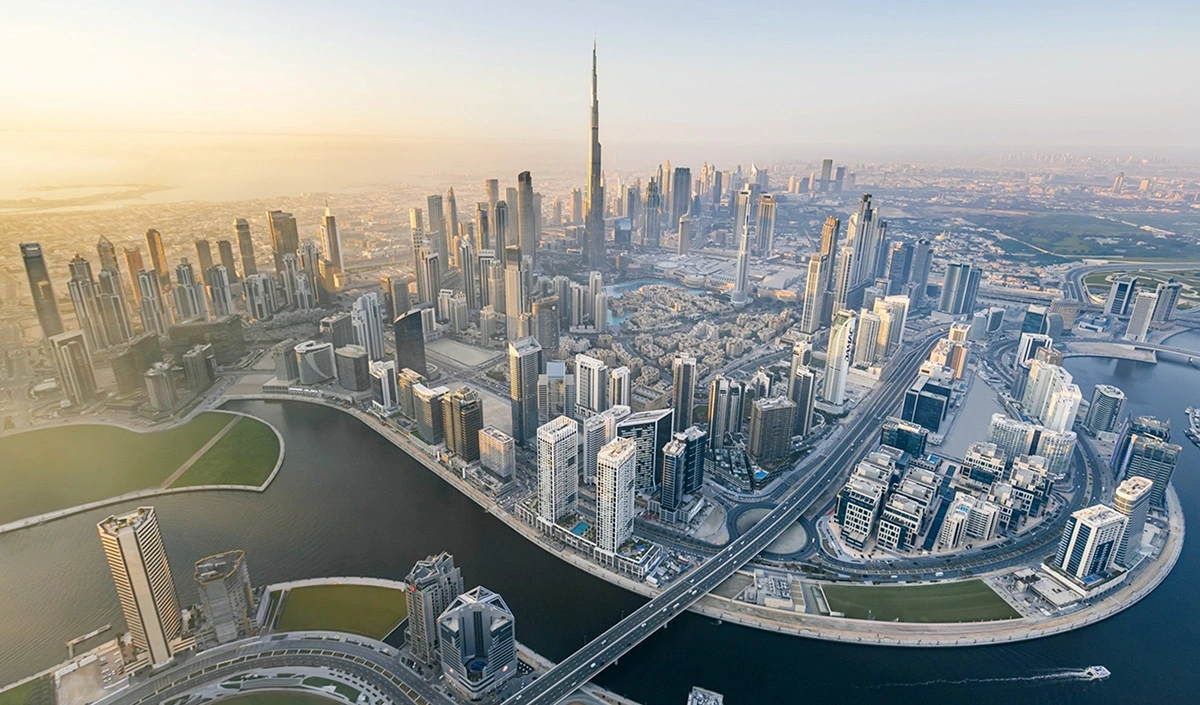
Dubai has retained its position as the world’s leading city for branded residences, with Ras Al Khaimah and Abu Dhabi also ranking among the global top 10, according to a new Savills report.
UAE strengthens its position in branded residences
The Savills Branded Residences Annual Report 2026–2027 places Dubai first globally, followed by Ras Al Khaimah in third place and Abu Dhabi in eighth.
Cairo also features in fifth place, highlighting the growing presence of the Middle East and North Africa in the global branded residential property market.
At country level, the UAE ranks second worldwide, behind the United States. Saudi Arabia and Egypt also feature among the top 10, ranking seventh and eighth respectively.
The rankings combine completed developments with projects currently in the pipeline.
GCC has 251 branded residential projects in pipeline
The Gulf Cooperation Council (GCC) has 99 completed branded residential projects and another 251 in the pipeline, giving it the largest pipeline among the sub-regions covered by the report.
The UAE remains the main driver of activity, while Saudi Arabia is also emerging as an important market for branded residential developments.
The figures point to a growing range of options for buyers interested in properties associated with established hospitality, lifestyle and other international brands.
Middle East branded residences supply set to grow
Across the wider Middle East and Africa, branded residential supply is projected to increase by 51% by the end of 2026, assuming developments scheduled for completion are delivered on time.
This compares with projected global growth of 24%.
The longer-term outlook is also significant. Savills expects supply across the Middle East and Africa to increase by 255% between 2026 and 2040, based on current projections.
The region could account for 23% of global branded residential supply by 2040, approaching Asia Pacific’s projected 24% share.
Egypt and Morocco are expected to drive much of the growth in Northern Africa, where branded residential supply is forecast to increase by more than 400%.
What buyers should consider
As more branded residential projects enter the market, buyers are likely to have a wider choice of locations, property types and associated services.
However, Savills says the brand name alone should not determine a purchasing decision. Property quality, available services and ongoing ownership costs will remain important considerations.
Andrew Cummings, Head of Residential Agency at Savills Middle East, said: “Dubai’s position reflects the depth of its branded residential market, while the presence of Ras Al Khaimah, Abu Dhabi and Cairo among the global top ten shows how activity is extending across the region. These markets offer different settings for branded living, creating opportunities for developers to tailor their offering to distinct buyer groups.
As choice increases, a recognised name alone will not be enough. Buyers will look closely at the quality of the homes, the services provided and the ongoing costs of ownership. Matching the brand to the location and delivering a consistent residential experience will be central to the sector’s long-term success.”
Lifestyle brands expand beyond hospitality
The report also identifies a shift in the types of brands entering the residential property sector.
While hospitality brands have traditionally dominated, fashion, automotive and specialist wellness brands are increasingly joining the market.
Standalone branded residences, which operate independently of a hotel, now account for 36% of the global project pipeline, up from 33% last year.
Savills expects competition to increase as the sector expands, making property quality, local market demand and long-term operational performance increasingly important to the success of individual developments.
