
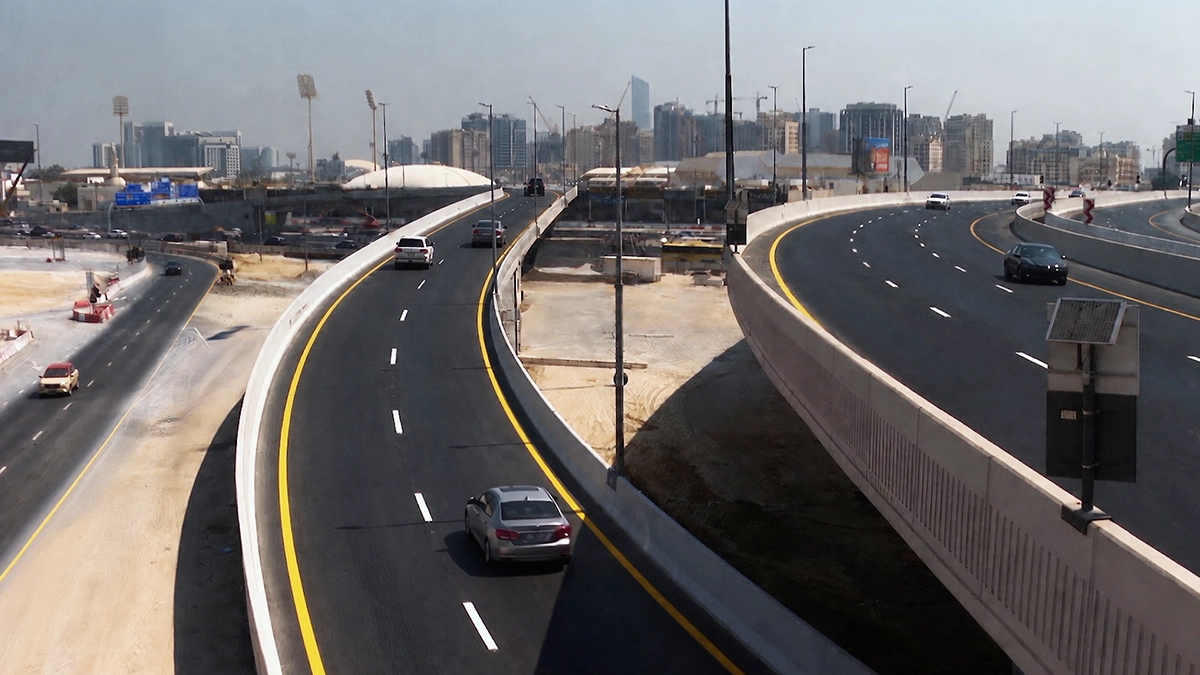
Dubai’s Oud Maitha Road project is now complete, adding new bridges, tunnels and road capacity across a key part of the city’s network and cutting the stated journey time on Oud Maitha Street from 20 minutes to five minutes.
The Roads and Transport Authority (RTA) said the project increases the road’s capacity from 10,400 to 15,600 vehicles per hour in both directions — a rise of up to 50%.
The works cover a busy network connecting Oud Maitha, Al Jaddaf, Za’abeel and Umm Hurair, while improving access to destinations including Latifa Hospital and Al Wasl Club. The areas served by the project are expected to have a combined population of more than 420,000 by 2030.
Oud Maitha Road project adds bridges, tunnels and 14km of roads
The Oud Maitha Road project involved upgrades at four major intersections, along with four bridges and two tunnels spanning a combined 4.3 kilometres.
A further 14 kilometres of roads were constructed or improved as part of the development.
Rather than focusing on a single junction, the project was designed to improve connections between several major traffic corridors. The upgraded network links Oud Maitha Road and Al Asayel Street with routes including Sheikh Rashid Road and Al Khail Road.
For motorists, that means the changes are spread across several points where traffic previously had to merge, turn or cross between major roads.
What changes for drivers in Oud Maitha and surrounding areas
The most significant headline figure is the change in journey time on Oud Maitha Street, which RTA says has fallen from 20 minutes to five minutes.
The authority also expects the additional capacity to help accommodate rising traffic demand as surrounding residential and development areas expand.
At the Oud Maitha Road and Sheikh Rashid Road intersection, the project added a lane to the left-turn ramp towards Al Garhoud Bridge, taking its capacity to 1,800 vehicles per hour.
The number of right-turn lanes from Sheikh Rashid Road towards Oud Maitha Road was also increased from two to three, lifting capacity to 4,000 vehicles per hour.
A new tunnel connects the service road on Oud Maitha Road with the Sheikh Rashid Road intersection for traffic heading towards Bur Dubai.
Three new bridges improve Al Asayel connections
One of the major parts of the scheme is the upgrade of the intersection linking Oud Maitha Road, Al Asayel Street and Al Wasl Club Street.
Two bridges connect Al Asayel Street with Al Khail Road through Al Wasl Club Street.
The first is a two-lane bridge capable of handling 2,400 vehicles per hour, carrying traffic from Al Asayel Street towards Al Wasl Club Street.
The second has three lanes and a capacity of 3,600 vehicles per hour, serving traffic travelling from Al Khail Road towards Al Asayel Street.
A separate two-lane bridge, with capacity for 2,400 vehicles per hour, handles left-turn traffic from Al Asayel Street towards Oud Maitha Road.
Access to Al Wasl Club was also upgraded, including its entry and exit points, with the aim of reducing conflicts between traffic using the access roads and the main road.
Al Khail Road and Za’abeel junctions also upgraded
Further improvements were made at the intersection of Al Wasl Club Street and Al Khail Road, including a two-lane bridge with capacity for 3,000 vehicles per hour.
The bridge serves traffic travelling from Al Asayel Street towards Al Khail Road in the direction of Business Bay Crossing.
Al Wasl Club Street was also widened at its exit towards Al Khail Road, with the exit expanded to two lanes. Service roads in both directions and additional parking spaces were also provided.
At the Za’abeel Palace Street, Al Khail Road and Oud Maitha Road intersection, RTA added a lane to the left-turn ramp from Al Khail Road towards Dubai-Al Ain Road.
That increased the ramp’s capacity from 900 to 1,800 vehicles per hour.
A single-lane tunnel with capacity for 1,200 vehicles per hour was also built to carry traffic from Dubai-Al Ain Road towards the service road on Oud Maitha Road, addressing traffic overlaps at the junction.
The bridge carrying traffic from Al Khail Road towards Oud Maitha Road was expanded from two to three lanes, increasing its capacity from 2,200 to 3,300 vehicles per hour.
Why the project matters as Dubai grows
The road upgrades are aimed at more than reducing delays at individual intersections.
The areas served by the project are expected to accommodate more than 420,000 people by 2030, increasing the importance of road capacity and connections between residential areas, services and major transport corridors.
For residents and visitors, the practical effect should be easier movement between Oud Maitha, Al Jaddaf, Za’abeel and Umm Hurair and improved access to major destinations in the surrounding network.
For Dubai’s road planners, the project also provides additional capacity ahead of anticipated population and traffic growth.
The completed infrastructure forms part of RTA’s wider approach to upgrading Dubai’s road network as development expands, with bridges, tunnels, additional lanes and service roads being used together rather than relying on a single junction improvement.
tanvir@dubainewsweek.com
