
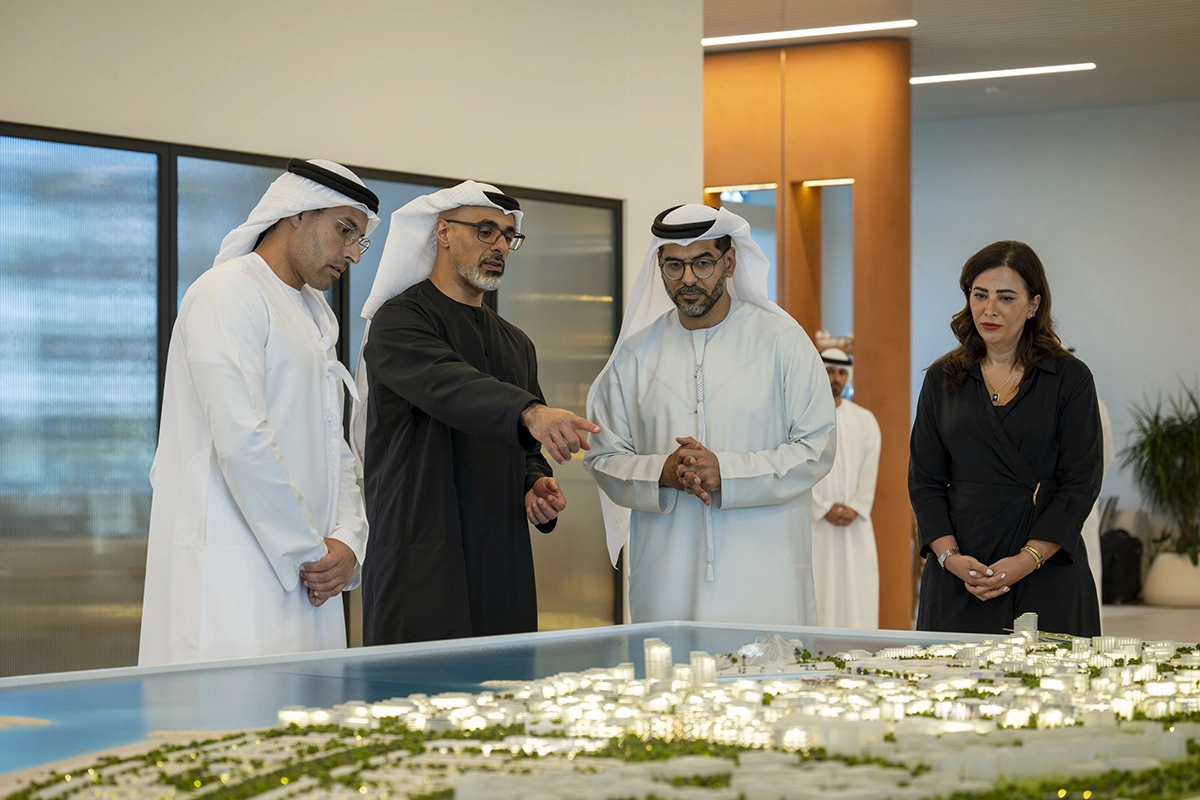
Abu Dhabi is set to add another landmark destination to its luxury real estate and tourism portfolio with the launch of Marsa Al Saadiyat, a sprawling waterfront development valued at Dhs100 billion.
Unveiled in the presence of H.H. Sheikh Khaled bin Mohamed bin Zayed Al Nahyan, Crown Prince of Abu Dhabi and Chairman of the Abu Dhabi Executive Council, the project marks the final phase of the Saadiyat Island masterplan.
Previously known as Saadiyat Marina District, the development has been renamed Marsa Al Saadiyat, reflecting the UAE’s maritime heritage while introducing a new mixed-use destination designed for luxury living, leisure and culture.
From Abu Dhabi’s largest marina and an 8km waterfront to thousands of new homes and an Etihad Rail station, here’s everything you need to know about the mega-development.
20 things to know about Marsa Al Saadiyat
1. It is a Dhs100 billion development
Marsa Al Saadiyat has a gross development value of Dhs100 billion, making it one of Abu Dhabi’s biggest real estate projects.
2. It spans 6.4 million square metres
The masterplanned community will cover 6.4 million sqm, creating a new mixed-use waterfront district on Saadiyat Island.
3. It has a new name
The project has been renamed from Saadiyat Marina District to Marsa Al Saadiyat by H.H. Sheikh Khaled bin Mohamed bin Zayed Al Nahyan.
4. Aldar is developing the project
Aldar is the master developer, responsible for the overall design and delivery of the project’s primary infrastructure.
5. It will have Abu Dhabi’s largest marina
The destination will feature the emirate’s biggest marina, with capacity for up to 350 sailing boats and luxury yachts.
6. It will offer 8km of waterfront
Residents and visitors will enjoy an 8km waterfront, including 5.6km of beaches.
7. Walking and cycling are central to the design
The community includes around 140km of walking paths and a 46km cycling track.
8. More than 58,000 people will live there
The development is planned to accommodate over 58,000 residents.
9. It will feature a range of luxury homes
Housing options include private mansions, luxury villas, branded residences, waterfront apartments and a hillside villa community.
10. Three schools are planned
The masterplan includes three schools, along with healthcare facilities and community amenities.
11. Green spaces are a major focus
The community will include landscaped parks, a central waterfront park, playgrounds, sports courts and clubhouses with outdoor pools.
12. A promenade will become the social hub
A 1km waterfront promenade will feature retail outlets, restaurants, a yacht club and two luxury hotels.
13. A new performing arts venue is coming
The theatre district will be anchored by Dar al Funoon, which will have capacity for more than 6,000 guests.
14. It connects directly to the Cultural District
A scenic pedestrian walkway will link the development to Saadiyat Cultural District, home to museums, dining and hospitality venues.
15. Residents will be close to global attractions
Nearby landmarks include Louvre Abu Dhabi, Zayed National Museum, Natural History Museum, teamLab Phenomena Abu Dhabi and the upcoming Guggenheim Abu Dhabi.
16. Families will have access to leading schools and universities
Educational institutions nearby include NYU Abu Dhabi, Berklee Abu Dhabi, Cranleigh Abu Dhabi, American Community School of Abu Dhabi and Harrow International School Abu Dhabi.
17. New roads and tunnels are planned
The development will connect to Umm Yifeenah Island and Reem Island, improving access to central Abu Dhabi.
18. It will include an Etihad Rail station
An underground Etihad Rail high-speed station is planned, enhancing connectivity with other emirates.
19. A new bridge will expand the destination
A bridge will connect Marsa Al Saadiyat to a new Aldar-developed island off the coast of Saadiyat Island.
20. The first homes go on sale in 2026
Sales are expected to begin in the second half of 2026, with enabling and infrastructure works scheduled to start in the third quarter of the year.
