
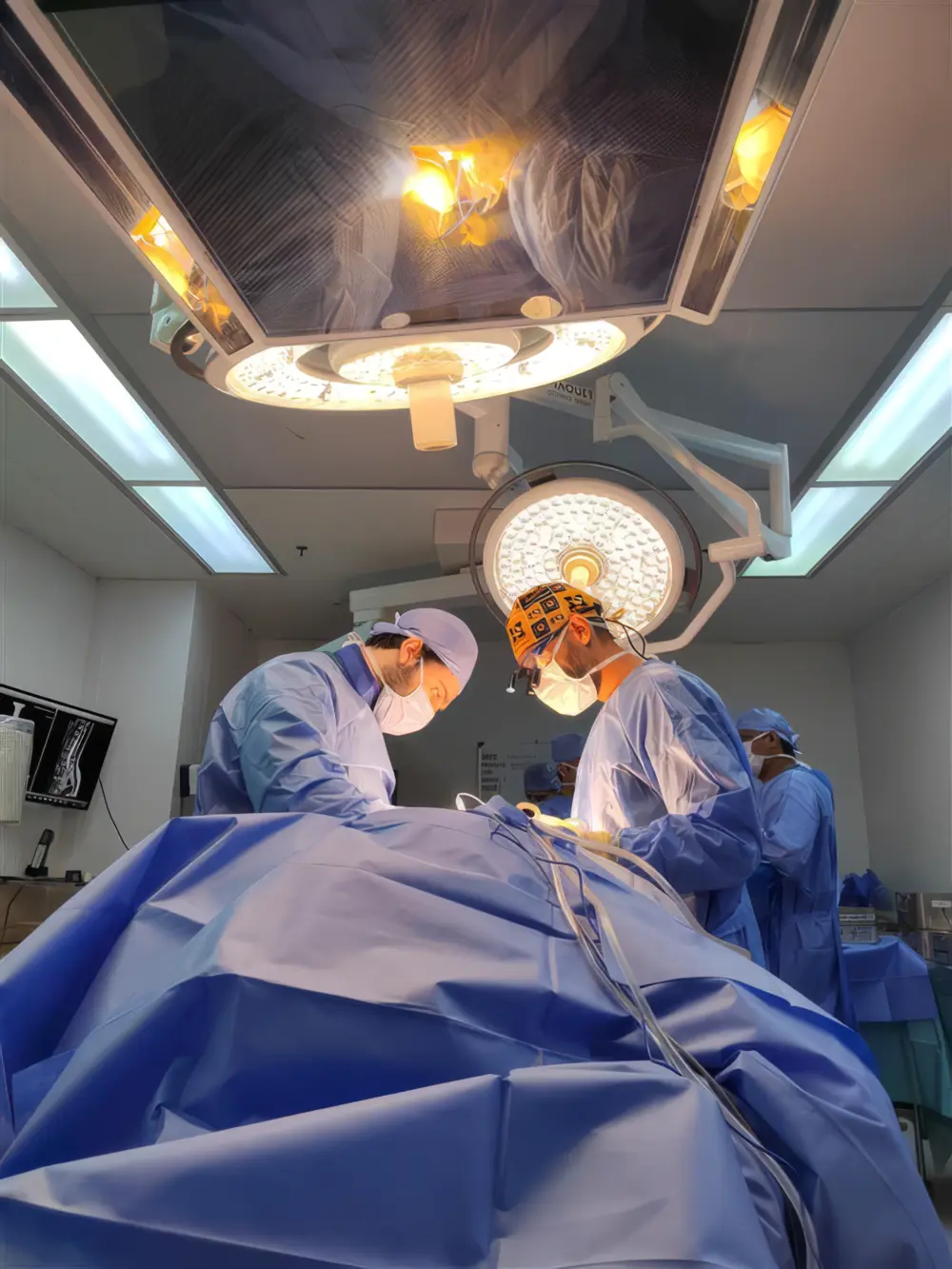
Three teenagers with severe scoliosis have successfully undergone complex spine surgery in Dubai using personalised 3D-printed surgical guides, highlighting the growing use of precision medicine in treating complex spinal conditions in the UAE.
The patients, two girls aged 14 and 15 and a 17-year-old boy, were diagnosed with advanced scoliosis, a condition that causes an abnormal curvature of the spine during adolescence. Without treatment, the condition can affect posture, mobility and overall quality of life.
Personalised treatment
The surgeries were performed at Medcare Orthopaedics and Spine Hospital using patient-specific 3D-printed guides developed from detailed CT scans. Surgeons planned each procedure virtually before the operations.
According to the surgical team, the customised guides reduced operating time by more than half compared with conventional scoliosis surgery. The technology also helped reduce blood loss and improve the accuracy of spinal implant placement.
“Every patient’s spine is different, particularly in severe scoliosis. These customised guides allow us to rehearse the operation virtually before surgery. During the actual procedure, they fit onto the patient’s vertebrae with remarkable precision, helping us place implants exactly where they are planned,” said Dr Sameh Abolfotouh, Consultant Orthopaedic and Spine Surgeon and Chairperson of AO Spine for the Middle East and Africa region.
Teen patients
One of the patients, a 14-year-old girl, had severe spinal curvature affecting both the upper and lower sections of her spine after months of persistent back pain.
A 17-year-old boy underwent surgery for a pronounced spinal deformity that affected his posture and long-term mobility. His procedure, which would normally take between eight and 10 hours, was completed in about four hours without post-operative complications.
The third patient, a 15-year-old girl with a spinal curve measuring more than 50 degrees, also underwent corrective surgery using the same technology, allowing surgeons to restore spinal alignment with a high degree of precision.
Improved outcomes
Doctors said scoliosis correction is one of the most challenging orthopaedic procedures because spinal implants must be placed accurately while operating close to the spinal cord and surrounding nerves.
The 3D-printed guides are created from advanced medical imaging and designed specifically for each patient. During surgery, they act as customised templates to support accurate implant placement while reducing the margin of error.
“Our objective is to make these complex procedures safer for both children and adults. By planning every step of the operation in advance, we are able to reduce operating time, minimise blood loss and help patients recover more quickly,” said Dr Azzam Fayyad, Consultant Orthopaedic and Trauma Surgeon, Medical Director and Head of Orthopaedics at Medcare Orthopaedics and Spine Hospital.
According to the surgical team, blood loss during the procedures was reduced to less than 400 millilitres, avoiding the need for major blood transfusions in these cases. Doctors said personalised surgical planning and 3D-printing technology are helping improve the safety and precision of complex spine surgery while supporting faster recovery for young patients.
tanvir@dubainewsweek.com
