
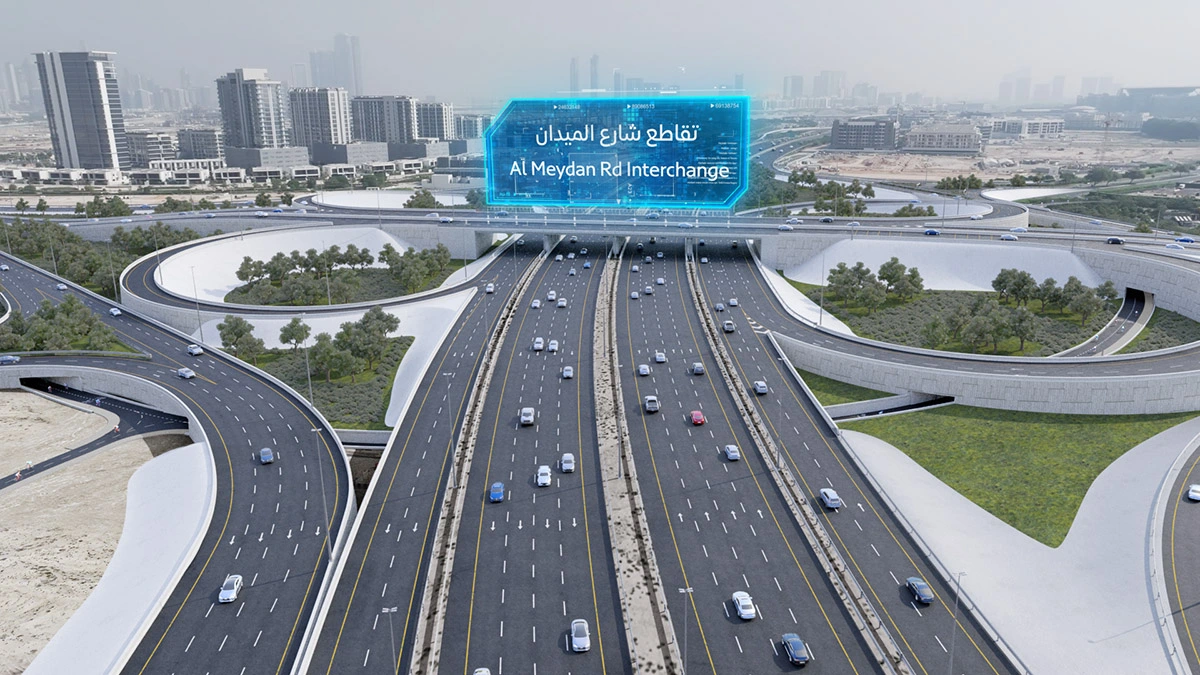
Dubai motorists could see major journey-time savings when a Dhs 1.161 billion Al Meydan Street project is completed, with one key route expected to take just 10 minutes instead of 30.
The Roads and Transport Authority (RTA) has awarded two contracts for the road development, which will add 17 kilometres of roads, 3,700 metres of bridges and new cycling connections across some of Dubai’s fast-growing residential and development areas. Construction is scheduled to be completed by the end of 2028.
Dubai Al Meydan Street project
The most significant change for drivers will be the expected reduction in travel time between Al Manama Street and Dubai-Al Ain Road and Umm Suqeim Street.
RTA says the journey will fall from 30 minutes to 10 minutes once the project is completed — a reduction of 20 minutes, or about 66 per cent.
The authority also expects the project to increase the capacity of Dubai’s north-south traffic corridors by 18 per cent.
Rather than relying on a single major route, the upgraded Al Meydan Street corridor will provide additional connections between several of Dubai’s main roads.
What is being built along Al Meydan Street?
The project stretches from First Al Khail Street to Umm Suqeim Street, with additional work extending along Al Marabea’ Street towards Sheikh Mohammed bin Zayed Road.
The two contracts have been split according to different sections of the corridor, allowing the large-scale project to be delivered across multiple work fronts.
The overall development includes:
- 17km of roads
- 3,700m of bridges
- Grade-separated interchanges at major junctions
- New connections between key arterial roads
- Cycling tracks and underpasses
- Improved access to surrounding residential communities
The corridor will serve areas with a combined population of more than 500,000 people.
New Dubai road interchanges will remove key traffic bottlenecks
One of the major changes will take place where Al Marabea’ Street meets Al Meydan Street.
The existing intersection will be upgraded to a grade-separated interchange with four lanes in each direction. The bridges will total 1,600 metres and will be capable of handling up to 14,400 vehicles per hour in both directions.
The design will allow traffic to move freely in all directions while creating a direct link between Umm Suqeim Street and Latifa bint Hamdan Street.
Another direct connection will link Al Marabea’ Street with Sheikh Mohammed bin Zayed Road, with three lanes in each direction and capacity for up to 7,800 vehicles per hour.
A 700-metre elevated link on Dubai-Al Ain Road towards Nad Al Hamar Street will also improve access to Nad Al Sheba.
Al Meydan and Muscat Street junction to become multi-level
The second contract focuses on the section of Al Meydan Street running from First Al Khail Street through Al Khail Road towards Muscat Street.
One of the most important upgrades will be at the Al Meydan Street-Muscat Street intersection, where the current signalised junction will be converted into a multi-level, grade-separated interchange.
The new interchange will have:
- 1,400m of bridges
- Four lanes in each direction
- Capacity of up to 14,400 vehicles per hour in both directions
- Free-flow movement in all directions
Around 2km of new surface roads will also connect Al Meydan Street with Latifa bint Hamdan Street.
Cycling routes will also be expanded
The project is not only focused on cars.
RTA will build an integrated cycling network, including underpasses beneath Al Meydan Street, allowing cycling routes to continue without being interrupted by major road crossings.
The new infrastructure will connect with Dubai’s existing cycling network and provide additional options for sustainable mobility around the corridor.
Which Dubai areas will benefit?
The road improvements are expected to strengthen connections for several major residential and development areas.
Among the communities expected to benefit are:
- Dubai Hills
- Nad Al Sheba
- Mohammed Bin Rashid Gardens
- Dubai District One
- Al Barari
- Communities along Al Meydan Street
- Communities along Latifa bint Hamdan Street
The project is strategically positioned between major roads including Sheikh Mohammed bin Zayed Road and Al Khail Road, providing an additional north-south corridor through Dubai.
Al Meydan Street project joins wider Dubai road expansion
The Dhs 1.161 billion project is being developed alongside the 12km Latifa bint Hamdan Street Development Project, which RTA has already started.
Together, the projects will create a connected network linking some of Dubai’s busiest arterial roads, including Sheikh Zayed Road, Al Khail Road, Sheikh Mohammed bin Zayed Road, Emirates Road and Sheikh Zayed bin Hamdan Al Nahyan Street.
The Latifa bint Hamdan Street project includes seven bridges totalling 2,300 metres and eight tunnels extending 900 metres. It is expected to accommodate approximately 16,000 vehicles per hour in both directions, with daily trips forecast to exceed 130,000.
That project is also scheduled for completion by the end of 2028.
RTA expects it to reduce the journey between Umm Al Sheif Street and Emirates Road from 33 minutes to 15 minutes, a 54 per cent reduction.
When will the Dubai Al Meydan Street project be completed?
The Al Meydan Street Development Project is scheduled for completion by the end of 2028.
For Dubai residents, the long-term significance is the creation of a higher-capacity road corridor connecting major arterial routes and fast-growing communities, with RTA targeting shorter journey times, improved traffic distribution and additional capacity as the emirate continues to expand.
tanvir@dubainewsweek.com
